
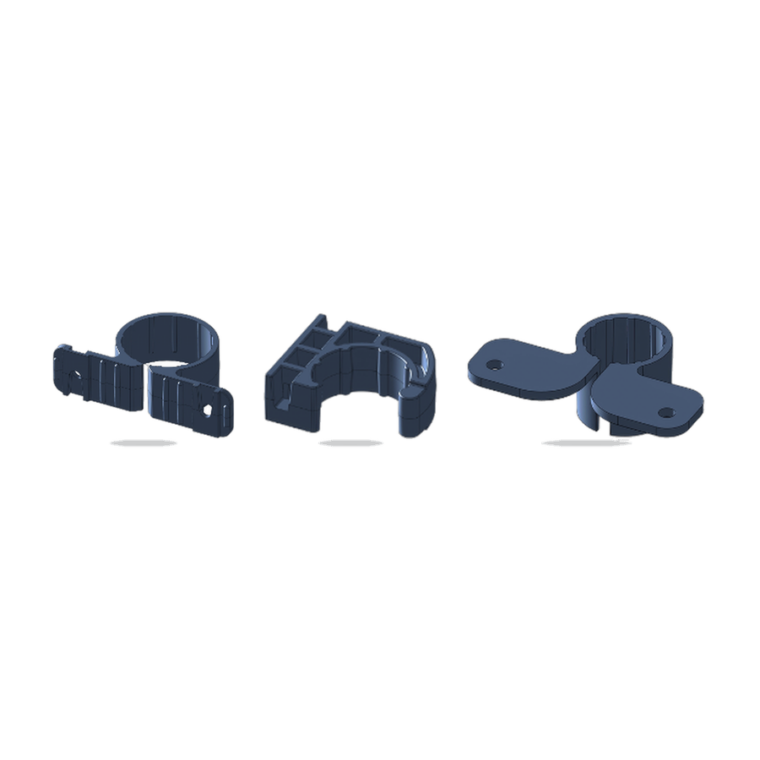
Our products
PEX clips & supports
Molded clips, straps and standoffs for PEX, conduit and cable.
At a glance
Installation
Snap it on. Drive it home.
Our J clips ship with the nail already loaded in the clip, so there is no box of loose nails to dig through with a pipe in the other hand.
- 1
Nail loaded
Every J clip ships with its nail seated in the clip, ready to drive.
- 2
Snap over the PEX
The hook goes over the pipe and the clip sits against the stud or joist.
- 3
Drive it home
Hammer the nail and the clip is fixed — one part, one tool.
Why we make these here
The clip aisle has been imported for a long time.
Three problems come with that, and between them they are the reason this line exists.
Cold-weather breakage
A clip that behaves in a warehouse splits when a crew drives the nail home in February. The resin and the geometry on this line were chosen for impact at low temperature, and then tested for it.
Long, costly logistics
Container lead times, minimum order quantities and a forecast made six months out — for a part that costs cents. Molded here, it ships on your schedule instead of a vessel’s.
Tariffs and import paperwork
Molded, assembled and packaged in Canada, and qualifying under USMCA. The clip aisle stops being a customs exercise.
Lean where it can be. Strong where it has to be.
A clip is a simple part, which is why so many of them are made badly. The usual answer to a strength problem is more plastic — thicker walls, heavier sections, a part that costs more to mold and more to ship and is no better at holding a pipe.
We took the other route. The retention comes out of the geometry and the resin, so the clip holds without carrying wall section it does not need. Less material per part, less weight per box, and nothing given up at the point where it grips.
HDPE and high-impact PP, chosen for how they behave cold and under load rather than for price per pound. A clip that survives a framing crew in February is worth more than one that saves a tenth of a cent in resin.
Why it is built this way
- Strength engineered into the geometry, not added as wall section
- HDPE and high-impact PP, selected for impact performance at low temperature
- Mechanically tested at MMRI rather than on our own bench
- No corrosion and no galvanic reaction against copper or PEX
- High-cavitation tooling matched to the volumes this category runs at
- Private label on existing tooling
Tested
Measured, not asserted.
Independently tested at the McMaster Manufacturing Research Institute (MMRI) in February 2026. The full reports are available on request.
What a clip carries
0.35lb
A water-filled 1/2″ PEX line at the 32″ support spacing the code asks for.
Safety margin
20×or more
Rated load against pipe load, for every O and A clip. The 1/2″ O-clip is at 64×.
J clip under impact
No break
A 15 lb dart dropped from 15″ (18.75 ft·lb). It compressed about half an inch and did not break.
| Clip | 1/2″ | 3/4″ | 1″ |
|---|---|---|---|
| Pipe load per clip* | 0.35 lb | 0.68 lb | 1.12 lb |
| O-clip, rated | 22 lb 64× | 28 lb 41× | 32 lb 29× |
| A-clip, rated | 18 lb 52× | 20 lb 29× | 22 lb 20× |
* Water-filled PEX at 32″ spacing. The small red figure is the margin over that load. Ratings sit at about a fifth of the load at failure — the 1/2″ O-clip failed at roughly 112 lb in testing.
Test details and a head-to-head comparison
How the clips were tested
Tensile testing on a Zwick Roell universal machine at 3 mm/s under displacement control at room temperature, covering the O and A geometries. The J clip was tested for impact, the failure that actually happens on site: a 15 lb dart dropped onto a clip nailed to a wooden platform, from decreasing heights until it first deflected.
J clip impact
- First deflection at 3.75 ft·lb (the dart from 3″), with compression under 0.09″ and not visually significant.
- At 18.75 ft·lb (from 15″), compression of 0.52″. The clip did not break.
Against a competing clip
Same machine, same day, same test, competing clips in the same sizes.
| Clip | Result |
|---|---|
| 1/2″ A-clip | Ours reached peak load at 18% more strain and absorbed 141% more energy. |
| 1/2″ O-clip | Ours reached peak load at 18% more strain and absorbed 13% more energy. The competing clip carried 18% more force at its peak. |
| 3/4″ O-clip | The competing clip was stronger: 54% more force at peak and 88% more energy absorbed. |
MMRI’s conclusion: all clip geometries showed ductile behaviour with clear yielding before peak load; the Ingersoll A-clips reached peak load at substantially higher strain, indicating greater deformation tolerance and energy absorption. Tensile testing of a fabricated part carries geometric effects, so these are part results, not material properties.
The range
What is in the line.
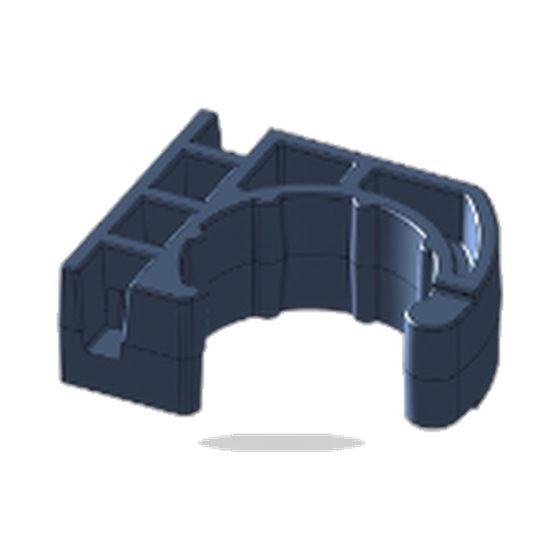
J clip
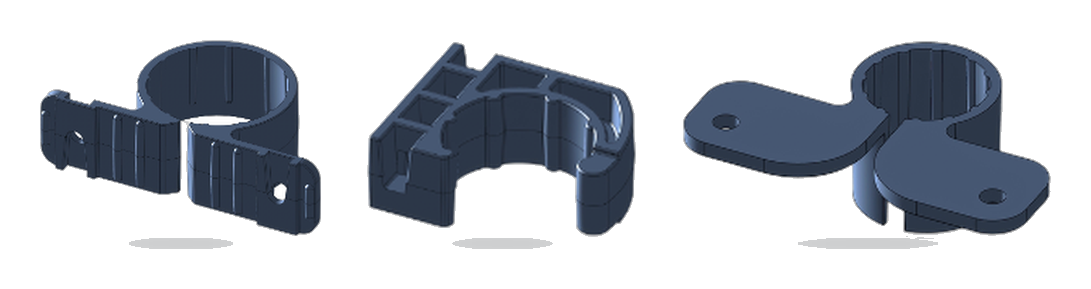
Single-run hook clip for fastening to studs and joists.
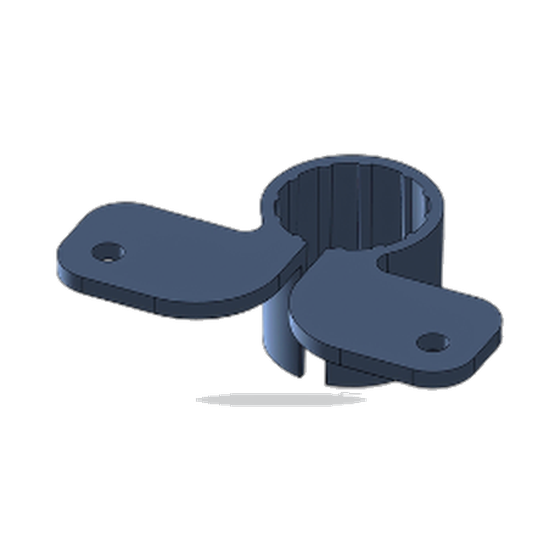
A clip
Saddle-style clip for a secured run.
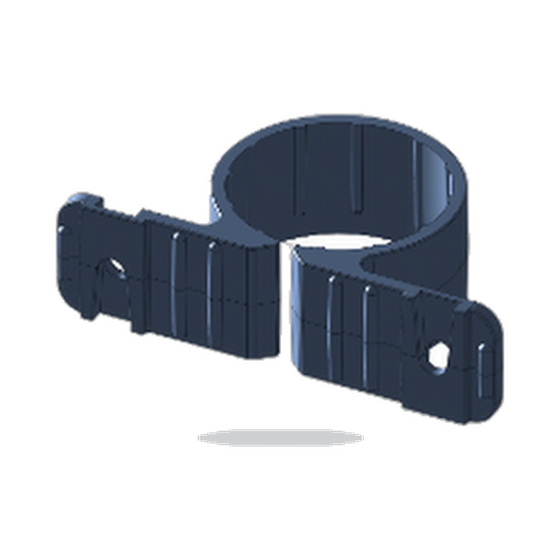
O clip
Full-wrap clip where the pipe needs capturing.
Our products
The rest of the line.
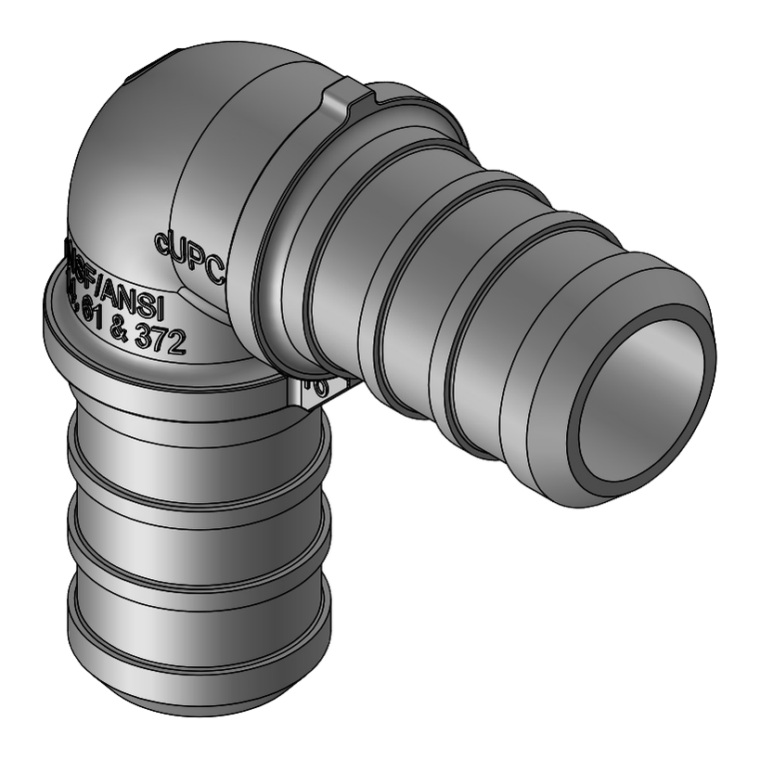
PEX fittings
ASTM F2159 and F1960 fittings, molded in polyphenylsulfone.
See the range ›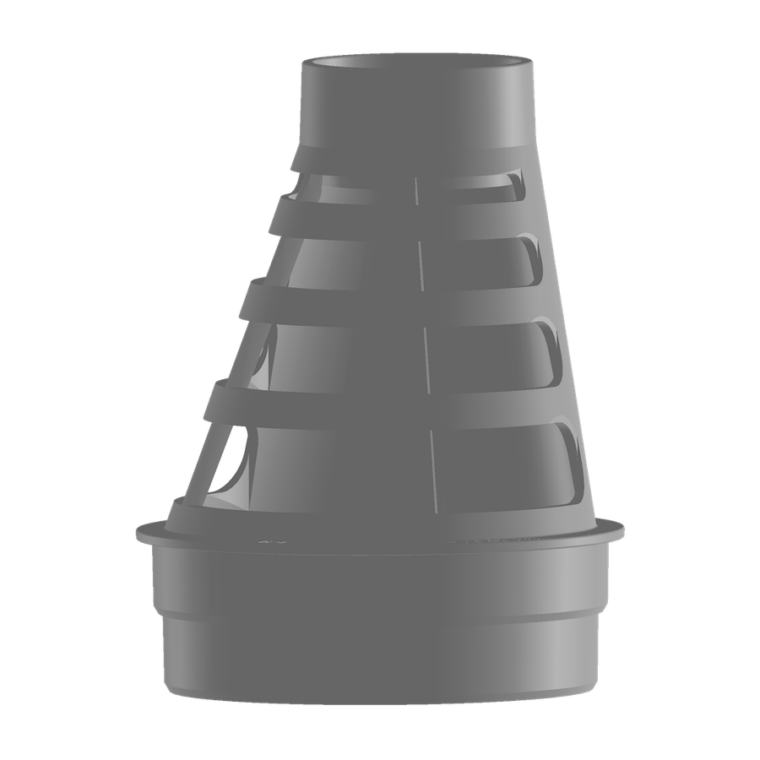
Freeze Guard
Sump pump discharge freeze guard. Keeps the pump flowing when the discharge line freezes.
See the range ›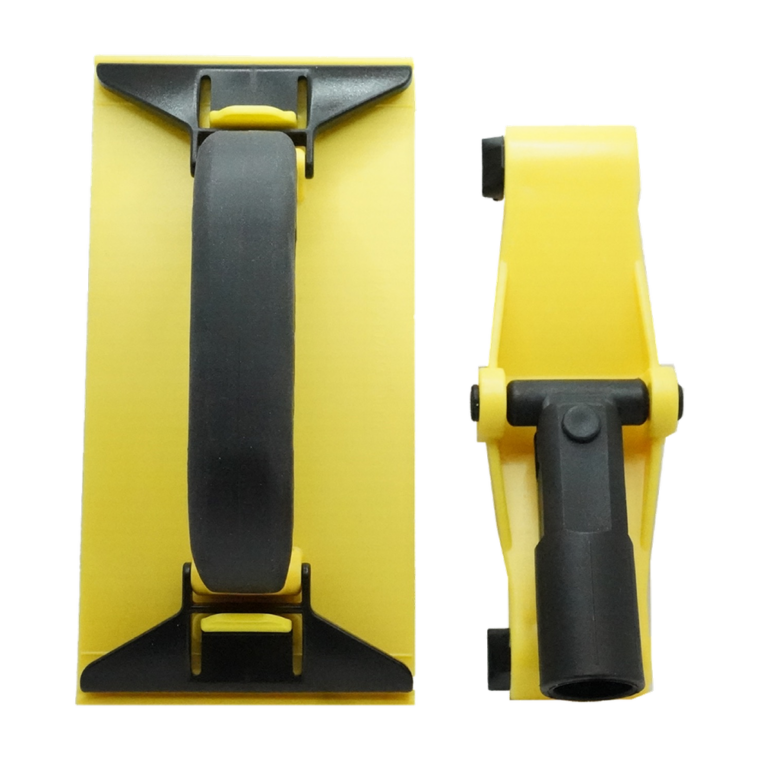
Hand & pole sanders
Drywall sanding tools built for crews who use them all day.
See the range ›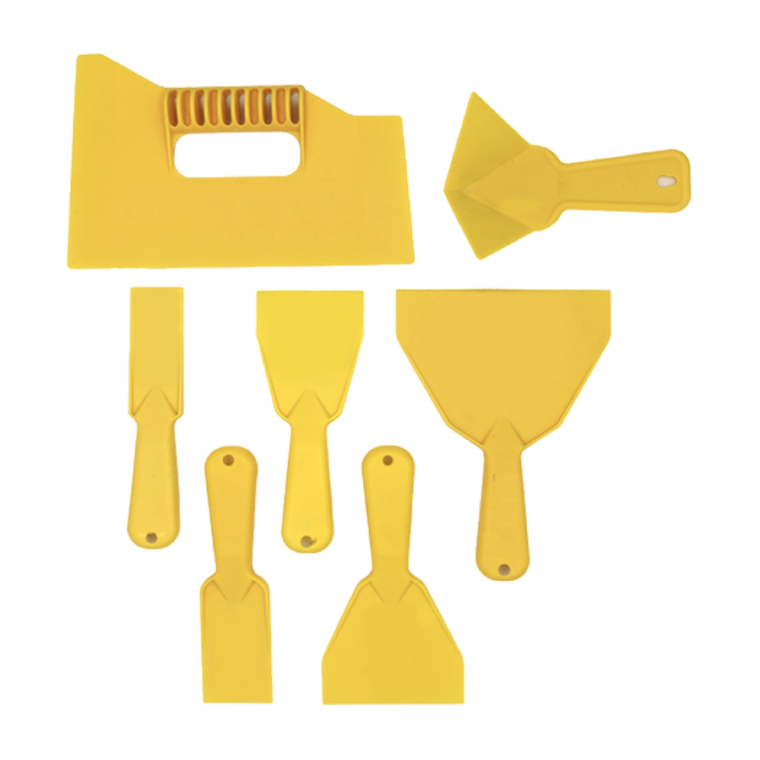
Drywall hand tools
Trade tools designed and molded in-house alongside the sander line.
See the range ›
Airlock & sausage packaging
A cartridge that closes again, and the chub filling line behind it.
See the range ›Contact
Ask about this line.
Pricing, availability, private label, or a sample. You get an answer from a person.